

Penimah · Turning Inward | Session Six
Penimah · Volverse hacia adentro | Sesión seis
דרך המלך
ענין השקטה
Inyan Hashkatah — Mind Quieting Advice — from the teaching of the Piaseczner Rebbe
Inyan Hashkatah — Consejos para aquietar la mente — de la enseñanza del Rebe de Piaseczno
Study Sheet for Penimah Session 6 · Hoja de estudio para la sesión 6 de Penimah
3 November 2026 · 7pm London time / 3 de noviembre de 2026 · 19:00 (hora de Londres)
Introduction to Hashkata and Meditative Practices / Introducción a la Hashkata y a las prácticas meditativas
Meditation, or in Hebrew, Hashkata, is an ancient and time-honored tradition with its roots in the world of contemplative practice. The meditative tradition in the history of Judaism, focuses in great detail in part on the Zohar and the more unusual practices for quieting the body and mind which are outlined therein. This is essential for some important background for understanding what Hashkata actually was, how it was related to the main body of Kabbalistic teachings and to Jewish mysticism more generally – what might be called ‘lived Kabbalah.’ This reveals the essentially experiential nature of the text and some of the ambitions that underwrote its creation, the Ari z»l in particular.
La meditación, o en hebreo Hashkata, es una tradición antigua y venerable que tiene sus raíces en el mundo de la práctica contemplativa. La tradición meditativa en la historia del judaísmo se centra, con gran detalle y en parte, en el Zohar y en las prácticas más inusuales para aquietar el cuerpo y la mente que allí se describen. Esto es esencial como antecedente importante para comprender qué fue realmente la Hashkata, cómo se relacionaba con el cuerpo principal de las enseñanzas cabalísticas y con la mística judía en general — lo que podría llamarse «Cábala vivida». Ello revela la naturaleza esencialmente experiencial del texto y algunas de las aspiraciones que respaldaron su creación, en particular las del Arí z»l.
The search for more unusual and more highly transformed states of mind is as much a feature of mysticism as it is a modern preoccupation. The interest in transcending the limitations of the ordinary mind is something that can provide points of connection between the contemplative practices of Kabbalists and Buddhists and engage contemporary audiences in new spiritual practices. Sustained meditation can bring about extraordinary changes – that is why people keep going even when they find it distressing and newly confronting. It gives them insight into new ways of being, relating, and living in the world.
La búsqueda de estados mentales más inusuales y más profundamente transformados es tanto un rasgo de la mística como una preocupación moderna. El interés por trascender las limitaciones de la mente ordinaria puede ofrecer puntos de conexión entre las prácticas contemplativas de los cabalistas y de los budistas, y atraer a públicos contemporáneos hacia nuevas prácticas espirituales. La meditación sostenida puede producir cambios extraordinarios — por eso la gente sigue adelante incluso cuando le resulta angustiante y desafiante de un modo nuevo. Les da una visión de nuevas maneras de ser, de relacionarse y de vivir en el mundo.
The Hebrew word hashkata means quieting, and it is also the word in the title of the Piaseczner Rebbe’s teaching below, Inyan Hashkatah.
La palabra hebrea hashkata significa aquietamiento, y es también la palabra del título de la enseñanza del Rebe de Piaseczno que sigue, Inyan Hashkatah.
The Piaseczner Rebbe and Derekch HaMelekch / El Rebe de Piaseczno y Derekch HaMelekch
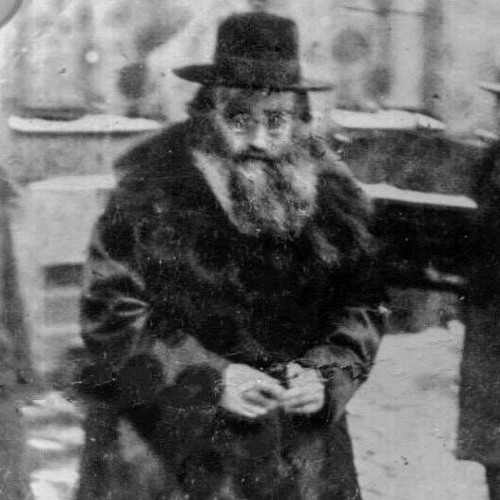
Rabbi Kalonymus Kalman Shapira (1889–1943), known as the Piaseczner Rebbe, was one of the most original spiritual masters of twentieth-century Chasidism. He served in the Warsaw Ghetto until the Aktion of 1942, and was murdered in Trawniki in November 1943. His manuscripts were discovered buried in milk canisters after the war.
El Rabí Kalonymus Kalman Shapira (1889–1943), conocido como el Rebe de Piaseczno, fue uno de los maestros espirituales más originales del jasidismo del siglo XX. Sirvió en el gueto de Varsovia hasta la Aktion de 1942 y fue asesinado en Trawniki en noviembre de 1943. Sus manuscritos fueron hallados enterrados en bidones de leche después de la guerra.
Derekch HaMelekch (The Way of the King) collects talks, articles and letters. The section before us, Inyan Hashkatah (Mind Quieting Advice), is a student’s record of a teaching the Rebbe gave during the Ten Days of Repentance in the Hebrew year 5696 or 5697 (1935 or 1936).
Derekch HaMelekch (El camino del Rey) reúne charlas, artículos y cartas. La sección que estudiamos, Inyan Hashkatah (Consejos para aquietar la mente), es el registro de un alumno de una enseñanza que el Rebe dio durante los Diez Días de Arrepentimiento del año hebreo 5696 o 5697 (1935 o 1936).
The student had been studying with a friend, a young scholar, and the Rebbe called the friend in; the student was called with him. He writes that he does not remember the whole of it, and that what he does remember he writes down as a reminder. That honest incompleteness is itself part of the teaching — the Rebbe was describing something that must be practised, not merely memorised.
El alumno estudiaba con un amigo, un joven erudito, y el Rebe llamó al amigo; el alumno fue llamado con él. Escribe que no recuerda todo, y que lo que recuerda lo anota como recordatorio. Esa honesta incompletitud forma parte de la enseñanza: el Rebe describía algo que hay que practicar, no solo memorizar.
Why the mind must be quieted / Por qué hay que aquietar la mente
חלום אחד מששים בנבואה
“A dream is one-sixtieth of prophecy.”
Babylonian Talmud, Berakhot 57b
«Un sueño es una sexagésima parte de la profecía.»
Talmud de Babilonia, Berajot 57b
The Rebbe opens with this saying of the Sages. As is known from his writings, what resists inspiration from above is a person’s ego — his yeshut. When the mind and thoughts are awake, it is hard for inspiration to rest on a person. In sleep, when the thoughts are quiet and he has no mind of his own, inspiration can rest on him.
El Rebe comienza con este dicho de los Sabios. Como es sabido por sus escritos, lo que se resiste a la inspiración desde lo alto es el ego de la persona, su yeshut. Cuando la mente y los pensamientos están despiertos, a la inspiración le cuesta posarse sobre la persona. En el sueño, cuando los pensamientos están en calma y ya no tiene mente propia, la inspiración puede posarse sobre ella.
The Rebbe also taught that people are more aroused in prayer than in Torah study. In study we use the ego — how to be subtle, how to be clever. In prayer the essence is the opposite: self-nullification.
El Rebe enseñó también que la gente se despierta más en la oración que en el estudio de la Torá. En el estudio usamos el ego: cómo ser sutil, cómo ser ingenioso. En la oración lo esencial es lo contrario: la anulación de uno mismo.
But a sleeping person cannot want anything. So the point is to reach, while awake and able to want, a state like sleep: to quiet the thoughts and desires that flow through us without end. Thoughts tangle one into another, and it is hard to withdraw from them.
Pero quien duerme no puede querer nada. Por eso lo esencial es llegar, despiertos y capaces de querer, a un estado semejante al sueño: aquietar los pensamientos y deseos que fluyen en nosotros sin fin. Los pensamientos se enredan unos con otros y es difícil apartarse de ellos.
The student adds something he once heard from the Rebbe: if a person watched the thoughts that arise in even one day, he would see almost no difference between himself and a madman — except that the madman acts on his thoughts. The thoughts themselves are much the same. The Rebbe then gave practical advice for quieting them.
El alumno añade algo que oyó una vez del Rebe: si una persona observara los pensamientos que surgen en un solo día, vería que casi no hay diferencia entre ella y un loco, salvo que el loco actúa según sus pensamientos. Los pensamientos mismos son muy parecidos. Luego el Rebe dio consejos prácticos para aquietarlos.
The practice / La práctica
The method / El método
Look at your thoughts for a short while — a few moments: what am I thinking? Slowly you will feel your head emptying, and the thoughts stop their usual rush. Then say one verse, for example “Hashem Elokim emet” (“The Lord God is true”), to tie the now-empty head to a single thought of holiness. After that you can ask for what you need to repair — strengthening of faith, or love and awe.
Mira tus pensamientos por un rato breve — unos momentos: ¿qué estoy pensando? Poco a poco sentirás que la cabeza se vacía y que los pensamientos dejan su habitual torrente. Entonces di un versículo, por ejemplo «Hashem Elokim emet» («El Señor Dios es verdad»), para atar la cabeza ya vacía a un único pensamiento de santidad. Después puedes pedir lo que necesitas reparar: fortalecer la fe, o el amor y el temor reverente.
Faith / La fe
For faith, the student heard the Rebbe say, in Yiddish: “I believe with complete faith that the Eibershter is the only thing that truly exists in the world. There is no reality apart from Him, and the whole world and all that is in it is only a glow of the light of Hashem.” He repeated it several times — but not forcefully. The whole point is only to quiet the thoughts, and saying it with force could only stir up the ego.
Para la fe, el alumno oyó al Rebe decir, en yidis: «Creo con fe completa que el Eibershter es lo único que verdaderamente existe en el mundo. No hay realidad fuera de Él, y todo el mundo y todo lo que hay en él es solo un resplandor de la luz de Hashem». Lo repetía varias veces, pero no con fuerza. Todo el sentido es solo aquietar los pensamientos, y decirlo con fuerza solo podría despertar el ego.
Love / El amor
For love, he heard the Rebbe say, again in Yiddish: “I would like so much to be near the holy Creator; I would like to feel closeness to the great Creator.”
Para el amor, oyó al Rebe decir, de nuevo en yidis: «Quisiera tanto estar cerca del santo Creador; quisiera sentir cercanía con el gran Creador».
Correcting character traits / La corrección de las cualidades personales
The Rebbe said that this quieting can serve for the repair of every bad trait — but not negatively; only positively, through the opposite of the bad trait. Someone afflicted with laziness should not speak about removing laziness, but about acquiring alacrity. He explained it with a baby: if a baby is crying and you tell him not to cry, the more you speak to him, the more he cries.
El Rebe dijo que este aquietamiento puede servir para reparar cualquier mala cualidad, pero no de modo negativo, sino positivo, a través de lo opuesto a la mala cualidad. Quien padece de pereza no debe hablar de quitarse la pereza, sino de adquirir diligencia. Lo explicó con un bebé: si un bebé llora y le dicen que no llore, cuanto más se le habla, más llora.
A practical aid: the clock / Una ayuda práctica: el reloj
One can also quiet the thoughts by looking at a clock — at the small hand, which barely moves for some time. This too quiets one’s wishes and thoughts.
También se pueden aquietar los pensamientos mirando un reloj — la manecilla pequeña, que casi no se mueve durante un buen rato. Esto también aquieta los deseos y los pensamientos.
The practice verse / El versículo de la práctica
After the quieting, which should bring some inspiration from above, the Rebbe commanded to say the verse “Horeni Hashem darkekha” to his own special melody.
Después del aquietamiento, que debe traer algo de inspiración desde lo alto, el Rebe ordenó decir el versículo «Horeni Hashem darkekha» con su propia melodía especial.
הוֹרֵנִי יְהוָה דַּרְכֶּךָ אֲהַלֵּךְ בַּאֲמִתֶּךָ יַחֵד לְבָבִי לְיִרְאָה שְׁמֶךָ
“Teach me, Lord, Your way, that I may walk in Your truth; unite my heart to revere Your name.”
Psalms 86:11
«Enséñame, Señor, tu camino, y andaré en tu verdad; unifica mi corazón para que tema tu nombre.»
Salmos 86:11
A note on the verse: the last phrase, yached levavi, “unite my heart”, names what the quieting is for: the scattered, chattering mind gathered into one.
Una nota sobre el versículo: la última frase, yached levavi, «unifica mi corazón», nombra para qué sirve el aquietamiento: la mente dispersa y parlanchina, reunida en una.
The Rebbe praised this practice greatly and said he was sure it would help. He spoke, for example, of faith: after using this quieting for some weeks, when one says Zeh Eli ve’anvehu (“This is my God and I will glorify Him”, Exodus 15:2), it will be a level of “pointing with a finger”, as the Midrash describes. Not believing in God: meeting God.
El Rebe elogió mucho esta práctica y dijo estar seguro de que ayudaría. Habló, por ejemplo, de la fe: tras usar este aquietamiento durante algunas semanas, cuando se dice Zeh Eli ve’anvehu («Este es mi Dios y lo glorificaré», Éxodo 15:2), será un grado de «señalar con el dedo», como describe el Midrash. No creer en Dios: encontrarse con Dios.
The student closes by saying that the first time he did not grasp the Rebbe’s whole idea. Some time later he was privileged to hear it again from the Rebbe’s own mouth, with added explanation, and the Rebbe urged them strongly to do this.
El alumno concluye diciendo que la primera vez no captó toda la idea del Rebe. Algún tiempo después tuvo el privilegio de oírla de nuevo de boca del Rebe, con explicaciones adicionales, y el Rebe les advirtió con insistencia que lo practicaran.
For reflection and discussion / Para la reflexión y el diálogo
1. The Rebbe says the ego resists inspiration, and that in sleep, when the mind has no hold on itself, inspiration can rest. What does this tell us about what ordinarily blocks us from receiving?
1. El Rebe dice que el ego se resiste a la inspiración y que en el sueño, cuando la mente no se sujeta a sí misma, la inspiración puede posarse. ¿Qué nos dice esto sobre lo que habitualmente nos impide recibir?
2. The Rebbe warns against saying the words of faith forcefully, because force stirs the ego. Can you recognise the difference in yourself between speaking from stillness and speaking from effort? What does the difference feel like?
2. El Rebe advierte contra decir con fuerza las palabras de la fe, porque la fuerza despierta el ego. ¿Reconoces en ti la diferencia entre hablar desde la quietud y hablar desde el esfuerzo? ¿Cómo se siente esa diferencia?
3. If we watched the thoughts of a single day, there would be almost no difference between us and a madman, except that the madman acts on his thoughts. Is that too strong, or accurate? Sit for two minutes and simply watch your thoughts. What do you notice?
3. Si observáramos los pensamientos de un solo día, casi no habría diferencia entre nosotros y un loco, salvo que el loco actúa según sus pensamientos. ¿Es demasiado fuerte o es exacto? Siéntate dos minutos y limítate a observar tus pensamientos. ¿Qué notas?
4. The method for working on a trait is indirect: cultivate its opposite rather than fighting the flaw directly. The Rebbe compares this to telling a crying baby “don’t cry”. Where else in your inner life do you recognise this dynamic?
4. El método para trabajar una cualidad es indirecto: cultivar su opuesto en lugar de combatir directamente el defecto. El Rebe lo compara con decirle «no llores» a un bebé que llora. ¿En qué otros lugares de tu vida interior reconoces esta dinámica?
5. After some weeks, the Rebbe says, Zeh Eli ve’anvehu will be like “pointing with a finger”. What would it mean to know God in that way — as perception rather than belief?
5. Tras algunas semanas, dice el Rebe, Zeh Eli ve’anvehu será como «señalar con el dedo». ¿Qué significaría conocer a Dios de esa manera, como percepción y no como creencia?
Source: Derekh HaMelekh, “Inyan Hashkatah” (Tel Aviv, 1976 edition), on Sefaria. The English and Spanish are study translations; please check them against the Hebrew. / Fuente: Derekh HaMelekh, «Inyan Hashkatah» (Tel Aviv, edición de 1976), en Sefaria. El inglés y el español son traducciones de estudio; conviene compararlas con el hebreo.
Penimah · cantor@synagogue.org.uk


Deja una respuesta